
Transit Advertising in India: A Straightforward Look at Trains, Metros & Buses
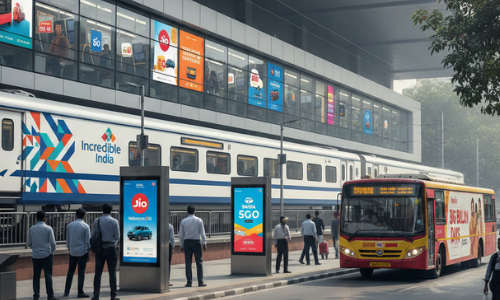
When you look around any Indian city today, one thing becomes very clear—people are always moving. Some are rushing for office, some are heading home after a long day, and many are traveling between states for work or family visits. And because of this constant movement, transit advertising has quietly become one of the most effective ways for brands to stay visible.
This blog is simply about what’s really happening with advertising on trains, metros, and buses across India, without overcomplicating things.
Train Advertising: Reaching People Who Actually Pay Attention
Train travel in India is a very real part of everyday life. People don’t just hop in and hop out—they sit for hours, look around, read, talk, and observe. That’s why brands like using long routes such as the Train advertisement in Amritsar to Delhi corridor. It’s a busy route, and the advertisements stay in sight for a long time.
Premium trains work even better. Many marketers prefer Shatabdi train advertisement in Jalandhar to Delhi because the crowd is different—more office professionals, more business travellers, people who usually notice and remember good branding.
The newer trains are also grabbing attention. Vande Bharat train advertisement is becoming popular because everything about the train looks fresh, clean, and modern. When your ad appears inside a cleaner environment, it automatically feels premium.
Metro Advertising: The Everyday Visibility Everyone Wants
If there’s one place where ads are impossible to ignore, it’s the metro.
Bangalore and Delhi are two cities where metro ads perform extremely well.
In fact, Metro trains advertisement in Bangalore has become a favourite among tech brands because the entire route is filled with IT employees and young professionals.
Delhi is even bigger. With lakhs of people using the network daily, Metro train advertisement in Delhi guarantees repeated visibility—morning rush, evening rush, weekends, everything.
Even one display inside a metro coach gets viewed dozens of times a day.
Bus Advertising: Still the Most Practical Way to Stay Everywhere
Buses might not be as fancy as metros or Vande Bharat, but they win in one area—coverage. They reach every corner of a city, and sometimes even small towns.
That’s why brands still rely on:
Bus advertisement in Bangalore for tech-heavy crowds
Bus advertisement in Kerala because the intercity routes carry mixed audiences
Bus advertisement in Tamil Nadu where public buses reach almost every district
If your goal is “maximum number of daily impressions,” buses do the job without burning your budget.
Why Transit Advertising Still Works
There are many reasons, but here are the most practical ones:
People can’t skip or block physical ads.
The same ad is seen repeatedly while traveling.
Brands can target specific cities, routes, or entire regions.
It works for small businesses as well as large companies.
Most importantly, people remember what they see every day on their route.
Conclusion
Transit advertising is not complicated.
It’s just about putting your message where people already are—inside a train, at a metro station, or on a bus route they use daily.
Whether it’s the Train advertisement in Amritsar to Delhi route, the crowd-heavy Metro trains advertisement in Bangalore, or the high-visibility Bus advertisement in Kerala, each one has its own advantage.
