
Why Route-Based Advertising Delivers Better Local Targeting
Most brands think bigger is better.
- Bigger hoardings.
- Bigger coverage.
- Bigger budgets.
But here’s the truth local brands don’t need the whole city. They need the right routes. That’s exactly why Route-Based Advertising works so well. It doesn’t try to be everywhere. It focuses on the roads your customers actually travel every single day. And that small shift makes a big difference.
So, What is Route-Based Advertising?
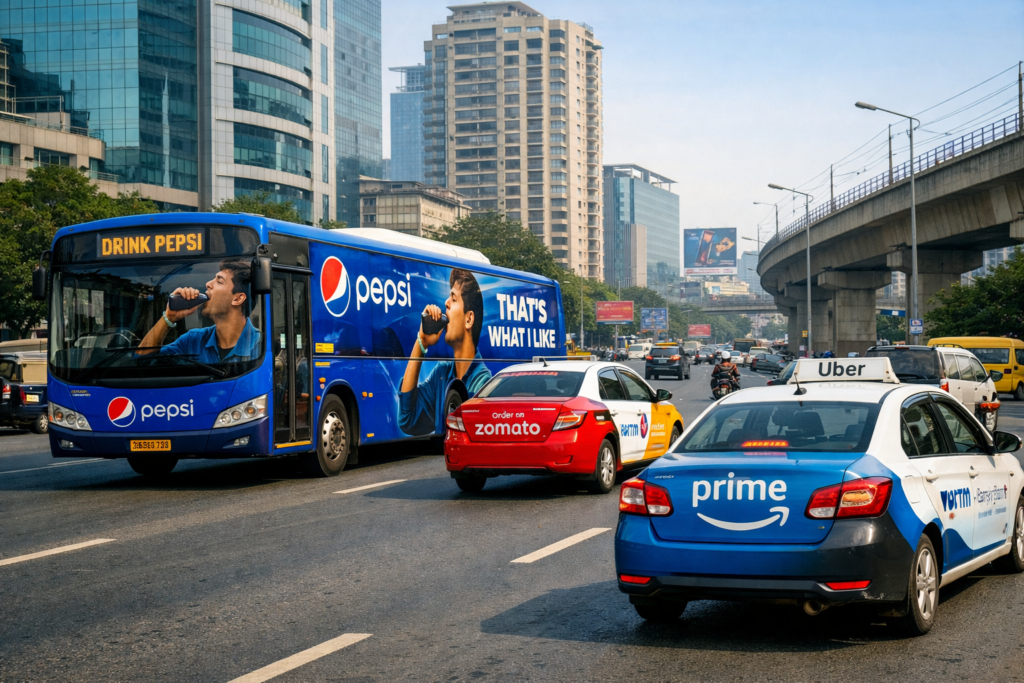
It’s simple. You brand vehicles — buses, cabs, autos, commercial vehicles — that run on fixed, busy routes. Not random roads. Not one-time placements. Fixed routes.
For example:
- A bus that travels daily between a residential area and an IT park
- Autos moving around markets and metro stations
- Cabs circulating in business districts
Your brand keeps showing up in the same area, again and again. That repetition is powerful. And that’s what makes Route-Based Advertising smarter for local targeting.
Why Local Focus Beats City-Wide Coverage
Let’s say you’re opening:
- A new clinic
- A coaching institute
- A retail store
- A real estate project
Most of your customers will come from nearby areas.
So why spend money targeting people 25 km away?
When your branded vehicle moves through the same neighborhoods daily, people start recognizing your name. They see it during traffic. They notice it at signals. They remember it.
That’s how local recall is built.
Movement Creates Attention
Static hoardings stay in one place.
Moving vehicles create dynamic visibility.
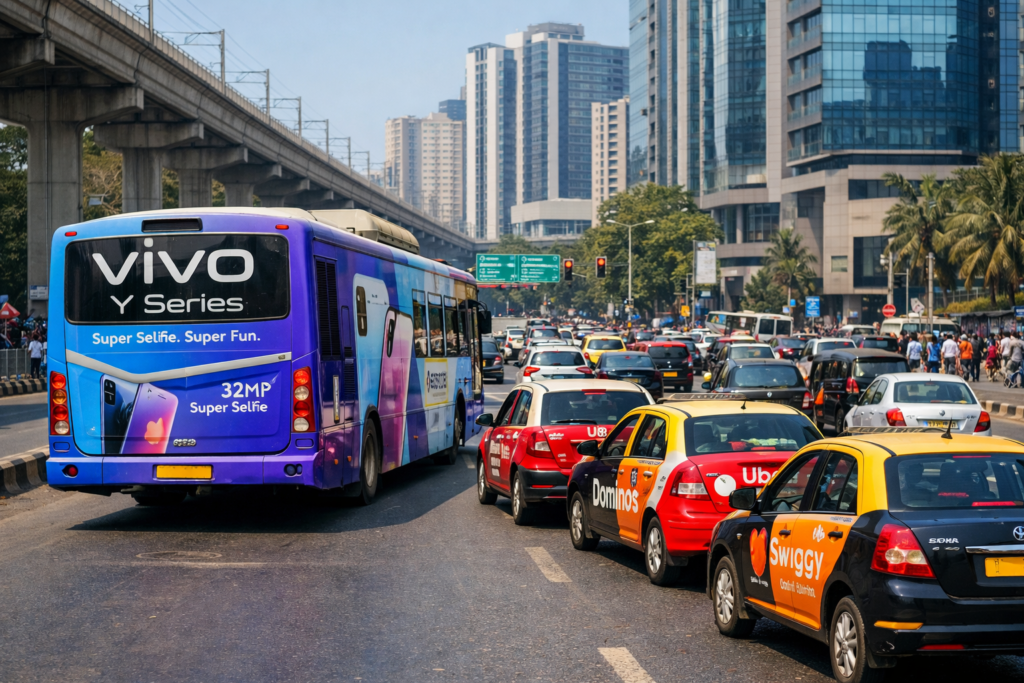
When a branded bus is stuck in traffic, hundreds of people see it. Drivers behind it. Pedestrians crossing the road. People waiting at signals.
And because these vehicles run daily, the exposure isn’t one-time.
It’s consistent.
That’s why Route-Based Advertising often creates stronger local memory than a single billboard.
It’s Also More Practical for Growing Brands
Let’s be honest.
Prime hoardings in metro cities are expensive.
But branding multiple vehicles on key routes often costs less and covers more ground within a specific zone.
For businesses targeting:
- A particular suburb
- A new store launch
- A local service area
This approach makes financial sense.
When Does Route-Based Advertising Work Best?
It works best when your audience has predictable movement patterns.
Office commuters.
College students.
Residential societies.
Shopping market visitors.
If your customer travels the same route daily, your brand can travel with them.
That’s the advantage of Route-Based Advertising — it becomes part of their routine.
Frequently Asked Questions
It is branding vehicles that run on fixed routes to repeatedly target specific local areas.
Yes. It works especially well for businesses targeting specific neighborhoods.
For hyperlocal campaigns, it often delivers better repetition and area-focused reach.
Yes. Many brands use geo-targeted ads alongside Route-Based Advertising for stronger results.
Conclusion
Visibility is good.
But relevant visibility is better.
Route-Based Advertising helps brands focus on the areas that actually matter instead of wasting budget on wide but untargeted exposure.
If your goal is strong local presence, repeated recall, and smarter spending — this strategy delivers exactly that.
👉 Also Check Out Our Related Blogs
📍 Ghaziabad
http://1️⃣ https://adblinkmedia.com/bus-advertising-ghaziabad/ 2️⃣ https://adblinkmedia.com/cab-branding-in-ghaziabad/ 3️⃣ https://adblinkmedia.com/top-hoarding-locations-in-ghaziabad/ 4️⃣ https://adblinkmedia.com/mobile-van-advertising-ghaziabad/
📍 Noida
http://5️⃣ https://adblinkmedia.com/why-bus-branding-in-noida/ http://6️⃣ https://adblinkmedia.com/bus-branding-outdoor-advertising-noida/
📍 Lucknowhttp://7️⃣ https://adblinkmedia.com/bus-branding-boost-business-lucknow/ https://adblinkmedia.com/top-hoardings-outdoor-advertising-lucknow/
Bus Advertising in Lucknow: A Simple Way for Brands to Stay Visible – adblinkmedia.com
BLOG
https://adblinkmedia.com/cab-advertising-bangalore-tech-office-corridors/
https://adblinkmedia.com/auto-rickshaw-advertising-mumbai-everyday-life/
https://adblinkmedia.com/mumbai-bus-advertising-impact/
https://adblinkmedia.com/bus-advertising-chennai-everyday-commute/
https://adblinkmedia.com/train-advertising-bangalore-daily-travellers/
https://adblinkmedia.com/bus-advertising-bangalore-daily-commuters/
https://adblinkmedia.com/auto-rickshaw-advertising-bangalore-local-areas/
https://adblinkmedia.com/best-bus-advertising-agencies-in-mumbai/