
Outdoor Advertising Trends: What Brands Should Watch
Outdoor advertising has never really disappeared.
What has changed is how brands use it.
Earlier, putting up a hoarding was enough. Today, that alone doesn’t work. Cities are crowded, people are distracted, and attention is limited. That’s why brands now need to understand Outdoor Advertising Trends instead of repeating old formats.
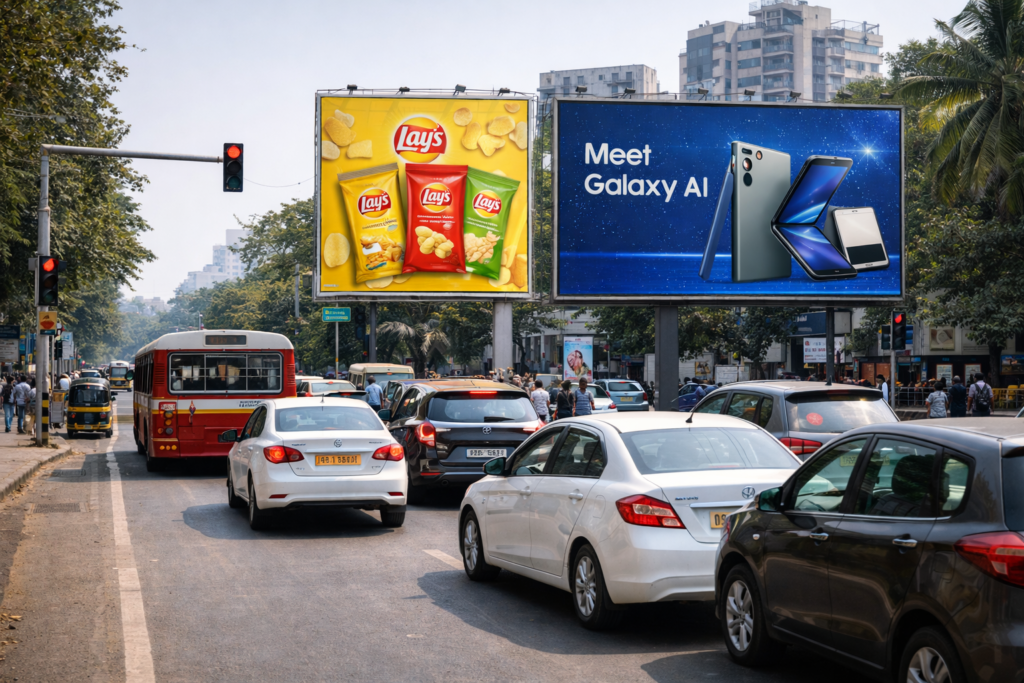
One clear shift is how brands think about visibility.
It’s no longer about being everywhere.
It’s about being seen in the right places.
Many brands have reduced the number of hoardings but improved location quality. One strong location that people cross daily creates more recall than five random sites no one notices properly.
This change in thinking is at the core of modern outdoor planning.
Another noticeable trend is the use of digital screens.
Not everywhere. Not blindly.
But where they make sense.
Digital outdoor ads allow brands to change messages, align with online campaigns, and stay fresh without reinstalling anything. That flexibility is why digital formats are becoming part of serious Outdoor Advertising Trends, especially in metro cities.
Messaging has also changed and this part is important.
Long lines, clever wordplay, heavy copy all of that struggles on the road. People don’t read outdoor ads. They glance at them.
Brands that are winning outdoor today use:
- very few words
- bold typography
- obvious brand presence
If the message isn’t understood in two seconds, it’s ignored. Simplicity is no longer a design choice. It’s a necessity.
Transit advertising is also being used differently now.
Earlier, it was treated like extra visibility.
Now, it’s planned properly.
Cabs, buses, and metro trains move through the same routes every day. When brands use that repetition intentionally, recall builds naturally. That’s why transit media is becoming a serious part of Outdoor Advertising Trends, not just an add-on.
Another big change is how outdoor and digital work together.
Outdoor ads don’t ask people to act immediately.
They make the brand feel familiar.
Later, when people see the same brand online, they trust it faster. Clicks feel easier. Decisions feel safer. Brands that understand this connection get more value from both channels.
Premium locations are also getting more attention than before.
Instead of spreading budgets thin, brands are choosing:
- fewer sites
- stronger visibility
- cleaner surroundings
This shift has made outdoor ads look more intentional and less cluttered. Quality over quantity is slowly becoming the norm.
Sustainability is entering the conversation too.
Not loudly. Not everywhere.
But it’s there.
Some brands are choosing better materials, efficient lighting, and more responsible placements. While this trend is still growing, it’s starting to influence how long-term outdoor campaigns are planned.
What all of this means is simple.
Outdoor advertising hasn’t stopped working.
Old habits have.
Brands that keep using outdoor the same way they did years ago feel disappointed. Brands that adapt to Outdoor Advertising Trends feel the difference.
Frequently Asked Questions
Yes, when planned with the right locations and clear messaging.
Not always. They work best in high-traffic urban areas.
Lorem ipsum dolor sit amet, consectetur adipisicing elit. Optio, neque qui velit. Magni dolorum quidem
Yes, because of daily repetition across the city.
ipsam eligendi, totam, facilis laudantium cum accusamus ullam voluptatibus commodi numquam, error, est. Ea, consequatur.
Every 4–6 weeks is usually enough.
It depends more on planning than
Conclusion
Outdoor advertising works best when it feels like part of the city, not noise inside it. Brands that respect attention, location, and simplicity are the ones people actually remember.
👉 Also Check Out Our Related Blogs
📍 Ghaziabad
http://1️⃣ https://adblinkmedia.com/bus-advertising-ghaziabad/ 2️⃣ https://adblinkmedia.com/cab-branding-in-ghaziabad/ 3️⃣ https://adblinkmedia.com/top-hoarding-locations-in-ghaziabad/ 4️⃣ https://adblinkmedia.com/mobile-van-advertising-ghaziabad/
📍 Noida
http://5️⃣ https://adblinkmedia.com/why-bus-branding-in-noida/ http://6️⃣ https://adblinkmedia.com/bus-branding-outdoor-advertising-noida/
📍 Lucknowhttp://7️⃣ https://adblinkmedia.com/bus-branding-boost-business-lucknow/ https://adblinkmedia.com/top-hoardings-outdoor-advertising-lucknow/
Bus Advertising in Lucknow: A Simple Way for Brands to Stay Visible – adblinkmedia.com
BLOG
https://adblinkmedia.com/cab-advertising-bangalore-tech-office-corridors/
https://adblinkmedia.com/auto-rickshaw-advertising-mumbai-everyday-life/
https://adblinkmedia.com/mumbai-bus-advertising-impact/
https://adblinkmedia.com/bus-advertising-chennai-everyday-commute/
https://adblinkmedia.com/train-advertising-bangalore-daily-travellers/
https://adblinkmedia.com/bus-advertising-bangalore-daily-commuters/
https://adblinkmedia.com/auto-rickshaw-advertising-bangalore-local-areas/
https://adblinkmedia.com/best-bus-advertising-agencies-in-mumbai/