
Why Route Planning Matters More Than Budget in Outdoor Advertising
When brands plan an outdoor campaign, the first question is almost always about money. “What’s the budget?” But here’s the thing most marketers realise later — budget doesn’t guarantee visibility. Placement does. In fact, route planning in outdoor advertising often determines campaign success more than the amount spent. Let’s break this down practically.
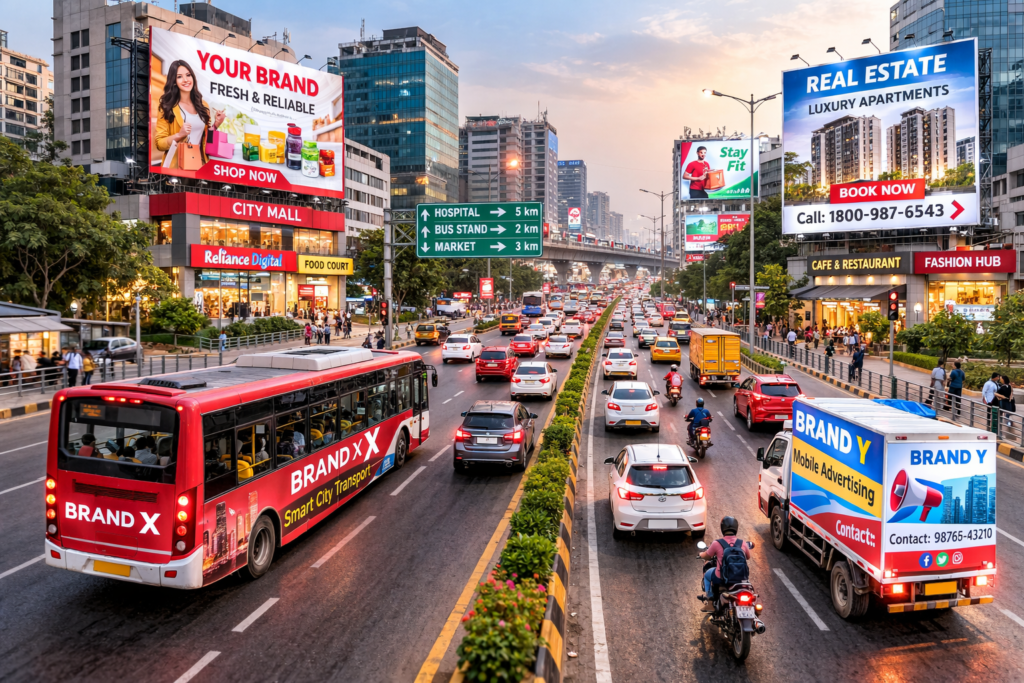
Not All Roads Deliver Equal Impact
In every metro city, some roads are high-value and some are just busy. There’s a difference.A road might have traffic, but does it have your target audience?
For example:
- A fintech brand should prioritize IT corridors.
- A real estate project should focus on residential belts.
- A coaching institute should target school and college routes.
Without proper route mapping, even a large campaign can miss the right eyes.
Audience Movement Is Predictable
People follow patterns.
Morning → Office routes
Afternoon → Market zones
Evening → Residential clusters
Transit media follows fixed routes daily. When brands align campaigns with these predictable movement patterns, repetition increases naturally. And repetition builds recall. This is where route planning in outdoor advertising becomes strategic instead of random.
Dwell Time Matters More Than Volume
High-speed highways look impressive. But if vehicles pass too quickly, message retention drops.
Now compare that to:
- Traffic-heavy junctions
- Signal-dense corridors
- Slow-moving office belts
Longer dwell time means more viewing time. More viewing time means stronger memory. Sometimes a mid-level traffic road with slower movement performs better than a premium expressway.
Budget Spread vs Budget Focus
Many brands try to “cover the whole city.” But wide coverage without focus dilutes impact. Instead of spreading across 20 random routes, dominating 5 strategic routes often builds stronger recall. When the same audience sees your branding repeatedly in their daily commute zone, the brand feels established. That’s how local dominance starts. And that efficiency comes from proper route planning in outdoor advertising, not just higher spending.
Relevance Reduces Wasted Impressions
Every outdoor campaign generates impressions. But not all impressions are valuable. If your target audience is working professionals and your buses run mostly in residential interior lanes, visibility increases but relevance drops. Strategic route selection ensures:
- Higher audience match
- Lower wasted exposure
- Better recall within the right segment
That directly improves return on investment.
Smaller Budgets Can Still Win
Here’s something many brands don’t realize. A smaller campaign with smart route focus can outperform a larger campaign with poor placement.
Why? Because outdoor advertising works on frequency within the same ecosystem. If the same group of people sees your brand repeatedly in their daily environment, memory builds. And memory influences choice
Frequently Asked Questions
Route planning in outdoor advertising refers to selecting specific roads, corridors, and zones where transit or outdoor formats will operate. It ensures the campaign reaches the right audience instead of generating random visibility.
o branding, and mobile vans. The main difference in ATL vs BTL in Outdoor Advertising is reach versus precision.
Because visibility without relevance doesn’t create impact. Even a large budget can underperform if ads are placed on the wrong routes. Strategic placement improves recall and reduces wasted impressions.
When campaigns are aligned with audience movement patterns, they create repeated exposure among the same target groups. This increases familiarity and improves return on investment.
Real estate developers, fintech companies, coaching institutes, retail brands, and app-based services benefit significantly — especially when targeting specific residential or corporate areas.
Yes. A focused campaign on high-impact routes often performs better than a large campaign spread randomly across multiple low-value areas.
Conclusion
Outdoor advertising isn’t just about scale. It’s about placement intelligence. The right roads.
The right zones. The right audience movement patterns. Budget helps amplify visibility. But strategy determines effectiveness. In the long run, brands that prioritize route precision over random coverage build stronger recall without overspending. Because in outdoor media, being seen in the right place consistently matters more than being seen everywhere once.
👉 Also Check Out Our Related Blogs
📍 Ghaziabad
http://1️⃣ https://adblinkmedia.com/bus-advertising-ghaziabad/ 2️⃣ https://adblinkmedia.com/cab-branding-in-ghaziabad/ 3️⃣ https://adblinkmedia.com/top-hoarding-locations-in-ghaziabad/ 4️⃣ https://adblinkmedia.com/mobile-van-advertising-ghaziabad/
📍 Noida
http://5️⃣ https://adblinkmedia.com/why-bus-branding-in-noida/ http://6️⃣ https://adblinkmedia.com/bus-branding-outdoor-advertising-noida/
📍 Lucknowhttp://7️⃣ https://adblinkmedia.com/bus-branding-boost-business-lucknow/ https://adblinkmedia.com/top-hoardings-outdoor-advertising-lucknow/
Bus Advertising in Lucknow: A Simple Way for Brands to Stay Visible – adblinkmedia.com
BLOG
https://adblinkmedia.com/cab-advertising-bangalore-tech-office-corridors/
https://adblinkmedia.com/auto-rickshaw-advertising-mumbai-everyday-life/
https://adblinkmedia.com/mumbai-bus-advertising-impact/
https://adblinkmedia.com/bus-advertising-chennai-everyday-commute/
https://adblinkmedia.com/train-advertising-bangalore-daily-travellers/
https://adblinkmedia.com/bus-advertising-bangalore-daily-commuters/
https://adblinkmedia.com/auto-rickshaw-advertising-bangalore-local-areas/
https://adblinkmedia.com/best-bus-advertising-agencies-in-mumbai/