
is Cab Advertising Effective in Mumbai’s Business Districts?
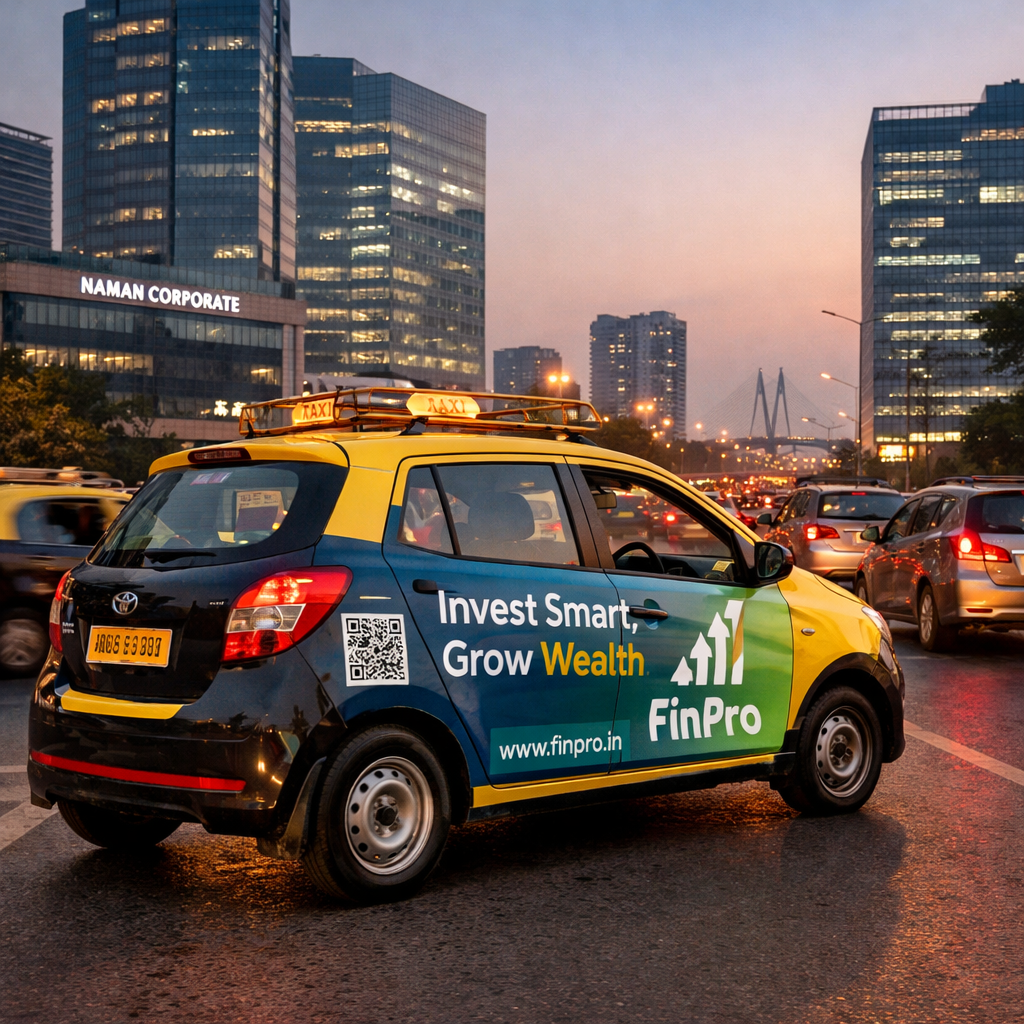
If you’ve ever driven through Bandra Kurla Complex at peak hours, you already understand one thing — movement is slow, but attention is everywhere. Cars line up at signals. People scroll through their phones. Some stare outside the window. Drivers look ahead, waiting for traffic to ease.
Now imagine a well-designed branded cab right in front of you.
You don’t just glance at it. You keep seeing it.
That repeated, unforced visibility is exactly why Cab Advertising in Mumbai’s Business Districts works particularly well.
Mumbai’s Commercial Zones Have a Pattern
Areas like:
- BKC
- Lower Parel
- Nariman Point
- Andheri East
- Powai
… aren’t random traffic spots. They are structured ecosystems.
Morning: office rush.
Afternoon: internal meetings and business movement.
Evening: outbound commute.
Thousands of professionals move through the same corridors every single day. And when advertising becomes part of that routine environment, it stops feeling like an interruption. It becomes familiar.
Traffic Creates Opportunity
In many cities, advertisers worry about congestion. In Mumbai, congestion actually helps.
Slow traffic means:
- Longer viewing time
- Eye-level exposure
- Reduced distraction
- Higher brand absorption
A cab sitting at a signal for 60–90 seconds delivers more visibility than a fast-moving vehicle seen for two seconds. That’s extended dwell time and it’s powerful. This is one of the strongest advantages of Cab Advertising in Mumbai’s Business Districts.
The Audience Is Highly Relevant
The Audience Is Highly Relevant
Business districts attract a specific crowd:
- Corporate professionals
- Senior executives
- Startup founders
- Financial consultants
- IT employees
- High-income commuters
If your brand speaks to professionals — whether it’s fintech, real estate, corporate training, SaaS, healthcare, premium retail, or even an app — you’re placing your message in the right environment.
It’s not just exposure. It’s contextual exposure.
Movement Expands Coverage Naturally
A billboard is fixed. A cab isn’t.
A single branded taxi can:
- Enter corporate office lanes
- Exit through commercial highways
- Pass metro stations
- Move through airport access roads
- Cover nearby residential societies
In one day, it touches multiple micro-locations within the same business ecosystem. That kind of organic spread increases brand familiarity without needing multiple static placements.
Repetition Is What Makes It Stick
Most professionals follow predictable travel routes. When they see the same brand during their commute repeatedly, something subtle happens.
The brand becomes recognizable.
Later, if they see an online ad, hear the name in conversation, or come across it while browsing, it doesn’t feel new. It feels known. And known brands feel safer.
That is why Cab Advertising in Mumbai’s Business Districts builds recall over time instead of relying on one-time impact.
It Works Even Better With Digital Support
Cab campaigns become stronger when paired with:
- Geo-targeted Google Ads
- LinkedIn campaigns targeting professionals
- Location-specific landing pages
- Simple QR codes on the cab
Someone sees the cab during traffic. Later, they search online. Your digital ad appears.
That reinforcement loop strengthens recall and increases the chance of action.
Is It Right for Every Brand?
Not necessarily. But it works especially well for:
- Financial services
- Real estate projects near business zones
- Corporate training institutes
- Tech and SaaS companies
- Healthcare chains
- Premium consumer brands
If your target audience spends time in commercial corridors, this format makes strategic sense.
Frequently Asked Questions
Yes. High traffic congestion and daily commuter patterns increase visibility and repetition, making cab advertising highly effective in commercial hubs like BKC, Lower Parel, and Andheri East.
For strong brand recall, a campaign should ideally run for at least 4 to 8 weeks. Repetition over time improves familiarity and response.
Fintech companies, real estate developers, SaaS brands, healthcare chains, corporate training institutes, and premium retail brands benefit the most due to the professional audience presence.
Cab advertising offers movement and wider route coverage, while hoardings provide fixed-location dominance. For route-based targeting and repeated exposure, cab campaigns often provide stronger recall.
Yes. Brands can combine cab ads with geo-targeted Google Ads, LinkedIn campaigns, QR codes, and dedicated landing pages to create measurable impact.
Conclusion
Yes, when routes are planned smartly, creatives are clean and bold, and the campaign runs long enough to build repetition.
It works because:
- Traffic increases viewing time
- Commuters follow fixed patterns
- Audience quality is strong
- Mobility increases exposure zones
- Digital integration enhances response
In a city where roads are always active and professionals are always moving, cab advertising becomes part of the everyday landscape.
And when your brand becomes part of someone’s daily commute, recall isn’t forced.
It’s built naturally.
👉 Also Check Out Our Related Blogs
📍 Ghaziabad
http://1️⃣ https://adblinkmedia.com/bus-advertising-ghaziabad/ 2️⃣ https://adblinkmedia.com/cab-branding-in-ghaziabad/ 3️⃣ https://adblinkmedia.com/top-hoarding-locations-in-ghaziabad/ 4️⃣ https://adblinkmedia.com/mobile-van-advertising-ghaziabad/
📍 Noida
http://5️⃣ https://adblinkmedia.com/why-bus-branding-in-noida/ http://6️⃣ https://adblinkmedia.com/bus-branding-outdoor-advertising-noida/
📍 Lucknowhttp://7️⃣ https://adblinkmedia.com/bus-branding-boost-business-lucknow/ https://adblinkmedia.com/top-hoardings-outdoor-advertising-lucknow/
Bus Advertising in Lucknow: A Simple Way for Brands to Stay Visible – adblinkmedia.com
BLOG
https://adblinkmedia.com/cab-advertising-bangalore-tech-office-corridors/
https://adblinkmedia.com/auto-rickshaw-advertising-mumbai-everyday-life/
https://adblinkmedia.com/mumbai-bus-advertising-impact/
https://adblinkmedia.com/bus-advertising-chennai-everyday-commute/
https://adblinkmedia.com/train-advertising-bangalore-daily-travellers/
https://adblinkmedia.com/bus-advertising-bangalore-daily-commuters/
https://adblinkmedia.com/auto-rickshaw-advertising-bangalore-local-areas/
https://adblinkmedia.com/best-bus-advertising-agencies-in-mumbai/