
What Factors Affect Bus Advertising Pricing in Indian Cities?
If you’ve ever asked for a bus branding quote in two different cities, you’ve probably noticed something confusing.
- Same size bus.
- Same ad format.
- Totally different pricing.
And then the obvious question comes — why?
The truth is, bus media doesn’t have a fixed rate card across India. A lot of small, practical things affect bus advertising pricing in Indian cities, and most of them aren’t visible from the outside.
Let’s talk about the real reasons.
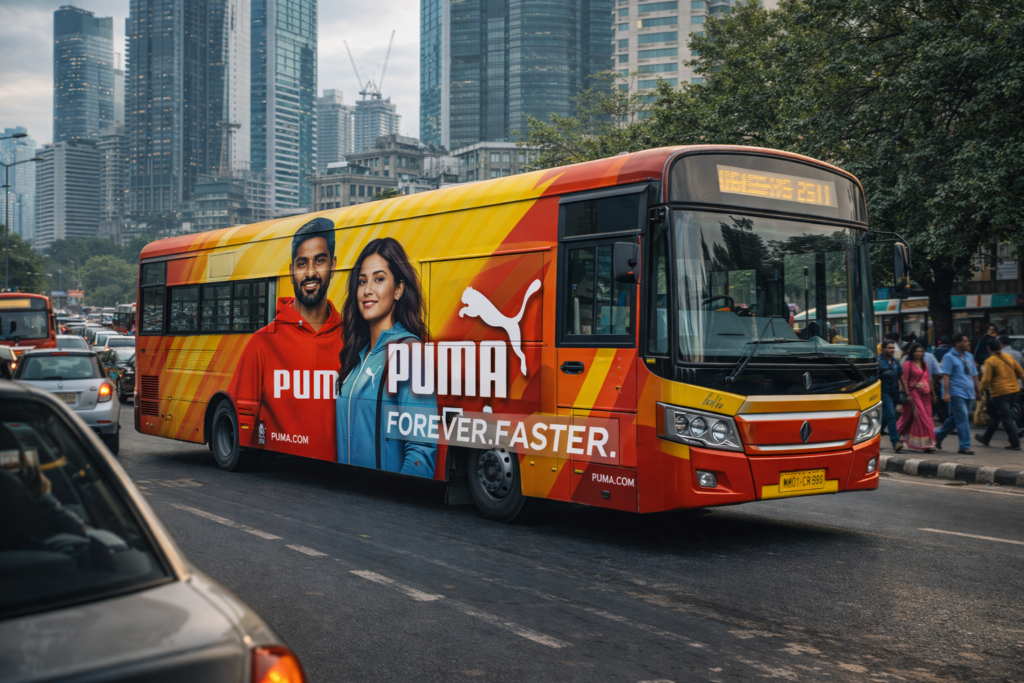
City Makes a Big Difference
First thing location.
Advertising on buses in Mumbai or Delhi will never cost the same as doing it in Nagpur or Indore.
Why?
Because metro cities have:
- More traffic
- More brands competing for visibility
- More premium routes
- Higher daily impressions
Naturally, demand pushes pricing up.
So yes, the city itself is one of the biggest drivers of bus advertising pricing in Indian cities.
Not All Buses Are Equal
A simple non-AC city bus and a premium Volvo running airport routes are completely different media assets.
And pricing reflects that.
Full wrap on a Volvo? Premium.
Back panel on a regular city bus? More economical.
Side panel? Mid-range.
Interior panel? Depends on footfall.
The format and bus category directly change how much exposure a brand gets — and that directly affects cost.
Routes Matter More Than You Think
Here’s something most people ignore.
Two buses in the same city can have very different pricing — just because of the route.
If the bus runs through:
- IT parks
- Corporate zones
- Airport corridors
- High-end commercial areas
The rate increases.
Brands aren’t just paying for a bus. They’re paying for where that bus travels daily.
And premium routes automatically increase bus advertising pricing in Indian cities.
Duration Changes Negotiation Power
One-month campaigns are possible.
But if you plan for 3 or 6 months, media owners are usually more flexible.
Outdoor advertising works on repetition. The longer the campaign, the stronger the impact and often the better the per-month cost.
Short duration = higher monthly rate.
Long duration = better cost efficiency.
Simple math.
Production Is Not “Just Printing”
People think printing is a small cost.
It’s not.
Vinyl quality, lamination, weather resistance, installation charges — all of this adds up.
High-quality wrap materials cost more, but they also last longer and look better.
That backend production cost is always included in the final quotation.
Permissions & Local Regulations
This is the boring part — but important.
Each city has different transport authorities and municipal rules.
Some include:
- Media tax
- Advertising permits
- Approval charges
These aren’t always visible to brands, but they influence the final number.
That’s another hidden reason why pricing changes from city to city.
Number of Buses in the Campaign
Branding 5 buses is very different from branding 50.
Larger campaigns usually get better rates per bus.
If you scale, negotiation improves.
Small campaigns tend to cost slightly higher per unit.
Season Also Affects Pricing
Festive months. Election season. Big sale periods.
During peak advertising time, inventory becomes limited.
And limited inventory increases cost.
Off-season bookings often give better flexibility.
Frequently Asked Questions
It varies by city, format, and route. Metro cities cost more than Tier 2 or Tier 3 cities due to higher demand and visibility.
Yes. Full wraps provide maximum visibility and therefore cost more compared to back or side panel ads.
In most cases, yes. Longer campaigns usually allow better pricing negotiation.
Local demand, traffic density, route value, and municipal regulations all affect rates.
Yes. It works especially well for city-focused brands looking for repeated exposure in specific areas.
Conclusion
There isn’t one universal rate for bus media in India.
It depends on:
- City
- Route
- Bus type
- Ad format
- Duration
- Production quality
- Demand season
Understanding these factors helps brands plan properly instead of just comparing numbers blindly.
Because bus advertising isn’t just about cost it’s about exposure quality.
👉 Also Check Out Our Related Blogs
📍 Ghaziabad
http://1️⃣ https://adblinkmedia.com/bus-advertising-ghaziabad/ 2️⃣ https://adblinkmedia.com/cab-branding-in-ghaziabad/ 3️⃣ https://adblinkmedia.com/top-hoarding-locations-in-ghaziabad/ 4️⃣ https://adblinkmedia.com/mobile-van-advertising-ghaziabad/
📍 Noida
http://5️⃣ https://adblinkmedia.com/why-bus-branding-in-noida/ http://6️⃣ https://adblinkmedia.com/bus-branding-outdoor-advertising-noida/
📍 Lucknowhttp://7️⃣ https://adblinkmedia.com/bus-branding-boost-business-lucknow/ https://adblinkmedia.com/top-hoardings-outdoor-advertising-lucknow/
Bus Advertising in Lucknow: A Simple Way for Brands to Stay Visible – adblinkmedia.com
BLOG
https://adblinkmedia.com/cab-advertising-bangalore-tech-office-corridors/
https://adblinkmedia.com/auto-rickshaw-advertising-mumbai-everyday-life/
https://adblinkmedia.com/mumbai-bus-advertising-impact/
https://adblinkmedia.com/bus-advertising-chennai-everyday-commute/
https://adblinkmedia.com/train-advertising-bangalore-daily-travellers/
https://adblinkmedia.com/bus-advertising-bangalore-daily-commuters/
https://adblinkmedia.com/auto-rickshaw-advertising-bangalore-local-areas/
https://adblinkmedia.com/best-bus-advertising-agencies-in-mumbai/