
Is Auto Rickshaw Advertising Effective for Small & Local Businesses?
If you run a small business, you don’t think like a big brand.
You think in terms of:
“How many calls will this bring?”
“Will people actually notice?”
“Is this worth my money?”
That’s why auto rickshaw ads often come up in discussion.
They’re visible. They’re local. They’re affordable.
But do they actually work? Let’s talk honestly.
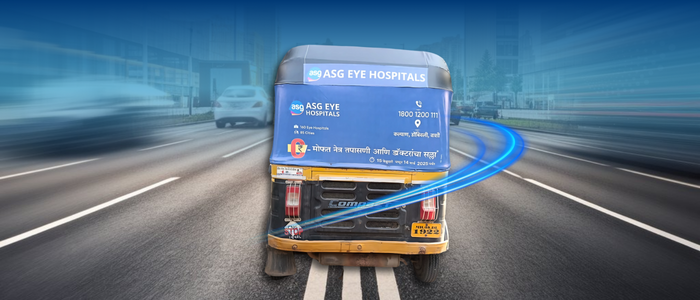
First, Understand Where Autos Actually Move
Auto rickshaws don’t run on highways or only premium roads.
They move inside:
- Residential colonies
- Market streets
- School areas
- Railway station surroundings
- Small commercial hubs
Now think about your business. If you run a clinic, a coaching class, a salon, a local restaurant, your customers are not spread across the whole city. They live nearby.
That’s exactly why auto rickshaw advertising can make sense for local businesses. It stays in the same ecosystem where your customers already travel daily.
Repetition Inside the Same Area Builds Memory
One big hoarding seen once doesn’t always create impact. But seeing the same brand name again and again near your house? That does something. Let’s say someone keeps noticing your ad on autos for 20 days straight in their area. Even if they don’t need your service today, your name gets stored in their memory. Later, when they need that service, your brand feels familiar. And people usually choose what feels familiar.
Budget Matters for Small Brands
Small businesses can’t burn lakhs every month.
Auto branding is more manageable compared to bus wraps, metro media, or big hoardings.
You can start with:
- 5 autos.
- 10 autos.
- Even fewer.
- Test for one month.
- See the response.
- Scale if it works.
That flexibility makes it practical.
It Works Best With Clear Local Messaging
Here’s where many businesses go wrong. They treat it like corporate branding. Auto ads should be simple. Not fancy. Not complicated.
- Clear message.
- Clear location.
- Clear contact.
For example:
“Skin Clinic – 2 Minutes From Main Market”
“Admissions Open – Call Now”
“New Restaurant – Opening Offer”
Direct communication works better than creative slogans.
When It May Not Work
Let’s not oversell it. If you’re targeting only high-income corporate executives or niche B2B clients, this may not be your strongest channel.
- Auto ads work best for:
- Mass local audience.
- Middle-income segments.
- Neighborhood-focused services.
Frequently Asked Questions
Yes, compared to buses, metro branding, or large hoardings, auto rickshaw advertising is much more budget-friendly. Small businesses can start with a limited number of autos and scale based on response.
Ideally, at least one month. Since this format works on repeated visibility, longer durations (2–3 months) usually create better brand recall in the same locality.
It can, especially if the ad includes a clear call-to-action like a phone number, offer, or nearby location reference. Many local businesses notice increased inquiries during active campaigns.
Coaching classes, clinics, salons, restaurants, real estate projects, retail shops, and other neighborhood – based services benefit the most because they target local customers.
For hyperlocal visibility, auto advertising can sometimes be more impactful because it reaches people repeatedly within the same neighborhood. However, combining it with digital ads usually gives the best results.
Conclusion
For small and local businesses, yes it can be very effective. Not because it’s flashy.But because it stays close to your customer’s daily life.
- It moves in their lane.
- It appears in their routine.
- It repeats without feeling aggressive.
And that slow repetition influences decisions. Not overnight.But consistently.
👉 Also Check Out Our Related Blogs
📍 Ghaziabad
http://1️⃣ https://adblinkmedia.com/bus-advertising-ghaziabad/ 2️⃣ https://adblinkmedia.com/cab-branding-in-ghaziabad/ 3️⃣ https://adblinkmedia.com/top-hoarding-locations-in-ghaziabad/ 4️⃣ https://adblinkmedia.com/mobile-van-advertising-ghaziabad/
📍 Noida
http://5️⃣ https://adblinkmedia.com/why-bus-branding-in-noida/ http://6️⃣ https://adblinkmedia.com/bus-branding-outdoor-advertising-noida/
📍 Lucknowhttp://7️⃣ https://adblinkmedia.com/bus-branding-boost-business-lucknow/ https://adblinkmedia.com/top-hoardings-outdoor-advertising-lucknow/
Bus Advertising in Lucknow: A Simple Way for Brands to Stay Visible – adblinkmedia.com
BLOG
https://adblinkmedia.com/cab-advertising-bangalore-tech-office-corridors/
https://adblinkmedia.com/auto-rickshaw-advertising-mumbai-everyday-life/
https://adblinkmedia.com/mumbai-bus-advertising-impact/
https://adblinkmedia.com/bus-advertising-chennai-everyday-commute/
https://adblinkmedia.com/train-advertising-bangalore-daily-travellers/
https://adblinkmedia.com/bus-advertising-bangalore-daily-commuters/
https://adblinkmedia.com/auto-rickshaw-advertising-bangalore-local-areas/
https://adblinkmedia.com/best-bus-advertising-agencies-in-mumbai/