
ATL vs BTL in Outdoor Advertising: What Should Brands Choose?
If you’ve ever planned an outdoor campaign, you’ve probably heard this question:
“Should we go ATL or BTL?”
And honestly, the answer isn’t as simple as people make it sound. The discussion around ATL vs BTL in Outdoor Advertising is not about which one is better. It’s about what your campaign actually needs right now. Let’s break it down in a practical way — no jargon.
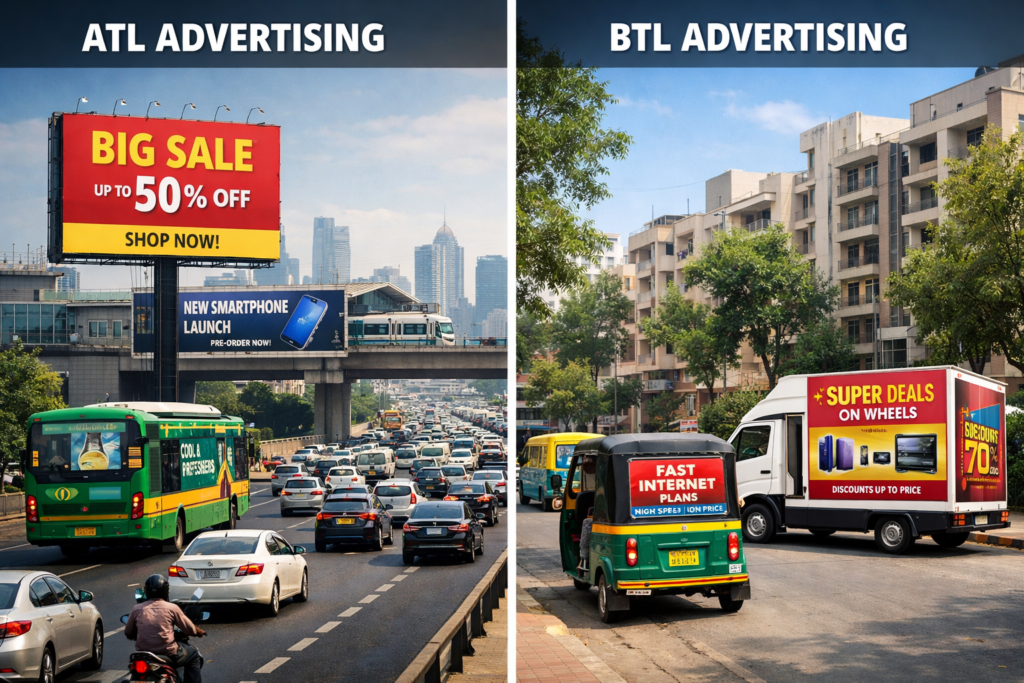
First, What Is ATL?
ATL (Above The Line) is all about scale.
Think:
- Big highway billboards
- Large city hoardings
- Airport displays
- Metro station branding
- High-traffic junction dominance
ATL is designed for visibility at a massive level. You’re not targeting a narrow audience — you’re aiming to be seen by as many people as possible.
It works best when:
- A brand is launching something new
- Market awareness is low
- You want strong positioning
- You want to look big and established
ATL creates presence. And presence builds perception.
Now, What Is BTL?
BTL (Below The Line) is more focused. Instead of covering the entire city, you target specific zones.
For example:
- Bus branding on selected routes
- Auto rickshaw ads in residential areas
- Cab branding in IT corridors
- Mobile vans for local promotions
- Society gate branding
BTL is practical. It’s closer to the ground. If ATL says, “Let everyone see me,” BTL says, “Let the right people see me.” That’s the real difference in ATL vs BTL in Outdoor Advertising.
The Real Question: What Is Your Objective?
Here’s where brands often get confused. They look at format first. They should look at objective first.
Ask yourself:
- Do we want awareness?
- Do we want footfall?
- Do we want dominance?
- Do we want local engagement?
If awareness is the priority → ATL makes sense. If conversions or local reach matter more → BTL often performs better.
Budget Also Plays a Role
Let’s be practical. ATL placements usually cost more because of premium visibility. BTL gives flexibility. You can:
- Choose selected routes
- Target specific pin codes
- Run short campaigns
- Test smaller budgets
For small or mid-sized businesses, BTL often feels more manageable. But that doesn’t mean ATL is only for big brands. It just depends on scale.
Can Brands Combine Both?
Actually, many smart brands do.
Example:
- ATL billboard for awareness
- BTL bus or cab ads for repetition in daily routes
This layered visibility strengthens recall. When people see your brand in multiple formats, it feels familiar. And familiarity builds trust. Sometimes the smartest move in the ATL vs BTL in Outdoor Advertising debate is not choosing one — but balancing both.
What Most Brands Get Wrong
They copy competitors. Just because another brand is using a giant hoarding doesn’t mean it’s right for you. Strategy should match:
- Audience
- Location
- Budget
- Timeline
- Business goal
Outdoor media works best when it’s intentional.
Frequently Asked Questions
ATL focuses on mass visibility through large formats like billboards and highways, while BTL targets specific areas using formats like bus ads, auto branding, and mobile vans. The main difference in ATL vs BTL in Outdoor Advertising is reach versus precision.
Generally, yes. ATL placements are often located in premium, high-traffic areas, which increases cost. BTL campaigns usually allow more budget flexibility and localized spending.
Generally, yes. ATL placements are often located in premium, high-traffic areas, which increases cost. BTL campaigns usually allow more budget flexibility and localized spending.
Small businesses can use ATL, but it depends on budget and objective. Many small brands prefer BTL because it allows targeted exposure without large investment.
Yes, many brands combine both for better impact. ATL builds large-scale awareness, while BTL reinforces visibility in specific locations. A balanced approach often delivers stronger campaign performance.
Conclusion
ATL builds scale. BTL builds precision. Neither is “better.” They just serve different purposes. So instead of asking, “Which one should we choose?” Ask: “What does our campaign need right now?” That clarity makes the decision much easier. And that’s the real takeaway when discussing ATL vs BTL in Outdoor Advertising.
👉 Also Check Out Our Related Blogs
📍 Ghaziabad
http://1️⃣ https://adblinkmedia.com/bus-advertising-ghaziabad/ 2️⃣ https://adblinkmedia.com/cab-branding-in-ghaziabad/ 3️⃣ https://adblinkmedia.com/top-hoarding-locations-in-ghaziabad/ 4️⃣ https://adblinkmedia.com/mobile-van-advertising-ghaziabad/
📍 Noida
http://5️⃣ https://adblinkmedia.com/why-bus-branding-in-noida/ http://6️⃣ https://adblinkmedia.com/bus-branding-outdoor-advertising-noida/
📍 Lucknowhttp://7️⃣ https://adblinkmedia.com/bus-branding-boost-business-lucknow/ https://adblinkmedia.com/top-hoardings-outdoor-advertising-lucknow/
Bus Advertising in Lucknow: A Simple Way for Brands to Stay Visible – adblinkmedia.com
BLOG
https://adblinkmedia.com/cab-advertising-bangalore-tech-office-corridors/
https://adblinkmedia.com/auto-rickshaw-advertising-mumbai-everyday-life/
https://adblinkmedia.com/mumbai-bus-advertising-impact/
https://adblinkmedia.com/bus-advertising-chennai-everyday-commute/
https://adblinkmedia.com/train-advertising-bangalore-daily-travellers/
https://adblinkmedia.com/bus-advertising-bangalore-daily-commuters/
https://adblinkmedia.com/auto-rickshaw-advertising-bangalore-local-areas/
https://adblinkmedia.com/best-bus-advertising-agencies-in-mumbai/